01
Masjid al-Qiblatayn
In the heart of Madinah
Masjid al-Qiblatayn is a historic mosque in Madinah, Saudi Arabia, where the Prophet Muhammad received the divine command to change the direction of prayer from Jerusalem to Mecca.This is Masjid al-Qiblatain (Arabic: مسجد القبلتين), translated as the “Mosque of the Two Qiblas”. In Rajjab 2 AH, the revelation of the Quranic verse came to change the direction of the Qibla from Masjid al-Aqsa in Jerusalem to the Ka’bah in Makkah. Masjid al-Qiblatain is historically important to Muslims as it is the location where the first congregational salah was prayed following the change.
During his time in Makkah, the Prophet Muhammed (ﷺ) used to pray towards Bait-al-Maqdis, with the Ka’bah in front of him. When he migrated to Madinah, he prayed towards Jerusalem for 16 months, but he hoped it would be changed to the Ka’bah.
During Dhuhr prayer (or it was said that it was Asar), the Prophet (ﷺ) had led his Companions when he was commanded to face towards the Ka’bah by the following revelation in the Quran in Surah al-Baqarah: “Verily, We have seen the turning of your (Muhammed’s) face towards the heaven. Surely, We shall turn you to a Qiblah (prayer direction) that shall please you, so turn your face in the direction of Al-Masjid Al-Haram (at Makkah). And wheresoever you people are, turn your faces (in prayer) in that direction.”The Prophet (ﷺ) turned around towards the Ka’bah and the Sahabah copied out of obedience. Thus the Ka’bah became the new Qibla of the Muslims for all time to come.
Masjid al-Qiblatain used to uniquely contain two mehrabs, one in the direction of Masjid al-Aqsa and the other towards Makkah. However, the old mehrab has now been covered.
02
Masjid Quba
3.5 km from Masjid an-Nabawi
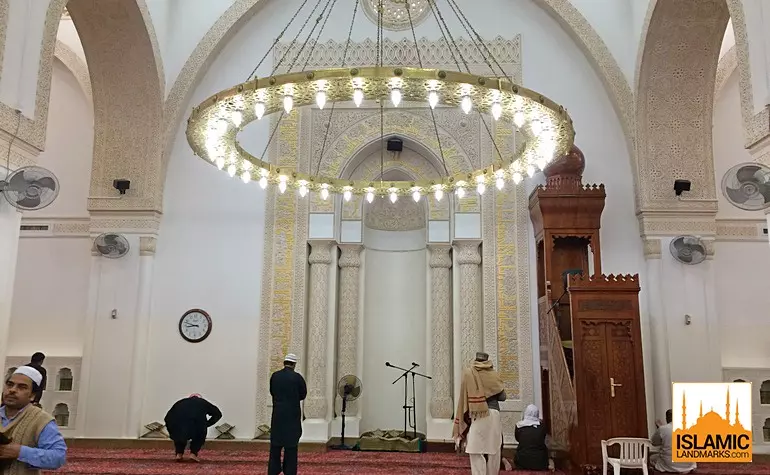
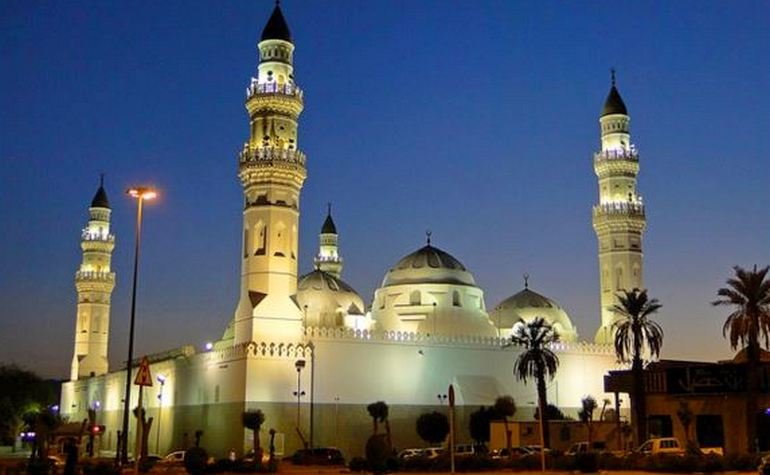
Masjid Quba is the first mosque built in the history of Islam, located on the outer edge of Madinah, Saudi Arabia.Masjid e Quba, located in the sacred city of Madinah, holds the prestigious honour of being the first mosque ever built in the history of Islam. It was established by the Prophet SAW during his significant migration (Hijrah) from Makkah to Madinah, which marks a foundational moment in Islamic history. This mosque not only serves as a place of worship but also represents the initial step in building a thriving Muslim community. Its construction embodies the core values of Islamic piety, communal harmony, and collective effort, making it a timeless symbol of faith and unity for Muslims worldwide.
Masjid e Quba’s historical importance is enriched by its association with the Prophet’s SAW hands-on involvement in its construction, highlighting his role as both a spiritual and community leader.n 622 CE, the Prophet SAW left Makkah with Abu Bakr (may Allah be pleased with him) and arrived at the outskirts of Madinah in an area known as Quba. The locals, who had long anticipated the Prophet SAW’s arrival, welcomed him with joy and reverence. It was here that the Prophet SAW laid the foundation for Masjid e Quba, marking the beginning of a new chapter for the Muslim Ummah.
The Prophet SAW spent several days in Quba, where he stayed with Kulthoom bin Hadm (may Allah be pleased with him) and participated in the construction of the mosque himself. Masjid e Quba is not just a simple structure; it is a symbol of faith, unity, and hard work. The Prophet SAW, alongside his companions, carried stones and other materials to build this sacred space. This hands-on involvement of the Prophet SAW in constructing Masjid e Quba demonstrated the value of communal effort and humility.The virtue of Masjid e Quba is mentioned in the Qur’an, where Allah SWT refers to it in Surah Taubah (9:108):
“Certainly a masjid founded on piety from the very first day is more deserving that you should stand in it…”
This verse highlights the mosque’s inherent spiritual significance, built on the foundations of piety and sincerity. The Prophet SAW further emphasised its importance through his own actions and words. He frequently visited Masjid e Quba, riding or walking to offer prayers. According to a hadith reported by Ibn Majah, the Prophet SAW said:
“He who purifies himself at his home and comes to Masjid Quba and offers two rakats therein, will be rewarded the reward of an Umrah.”
This hadith underscores the immense reward and spiritual merit attached to visiting Masjid e Quba, making it a site of profound importance for pilgrims and visitors.
03
The mountain of Uhud
7 km from Masjid an-Nabawi
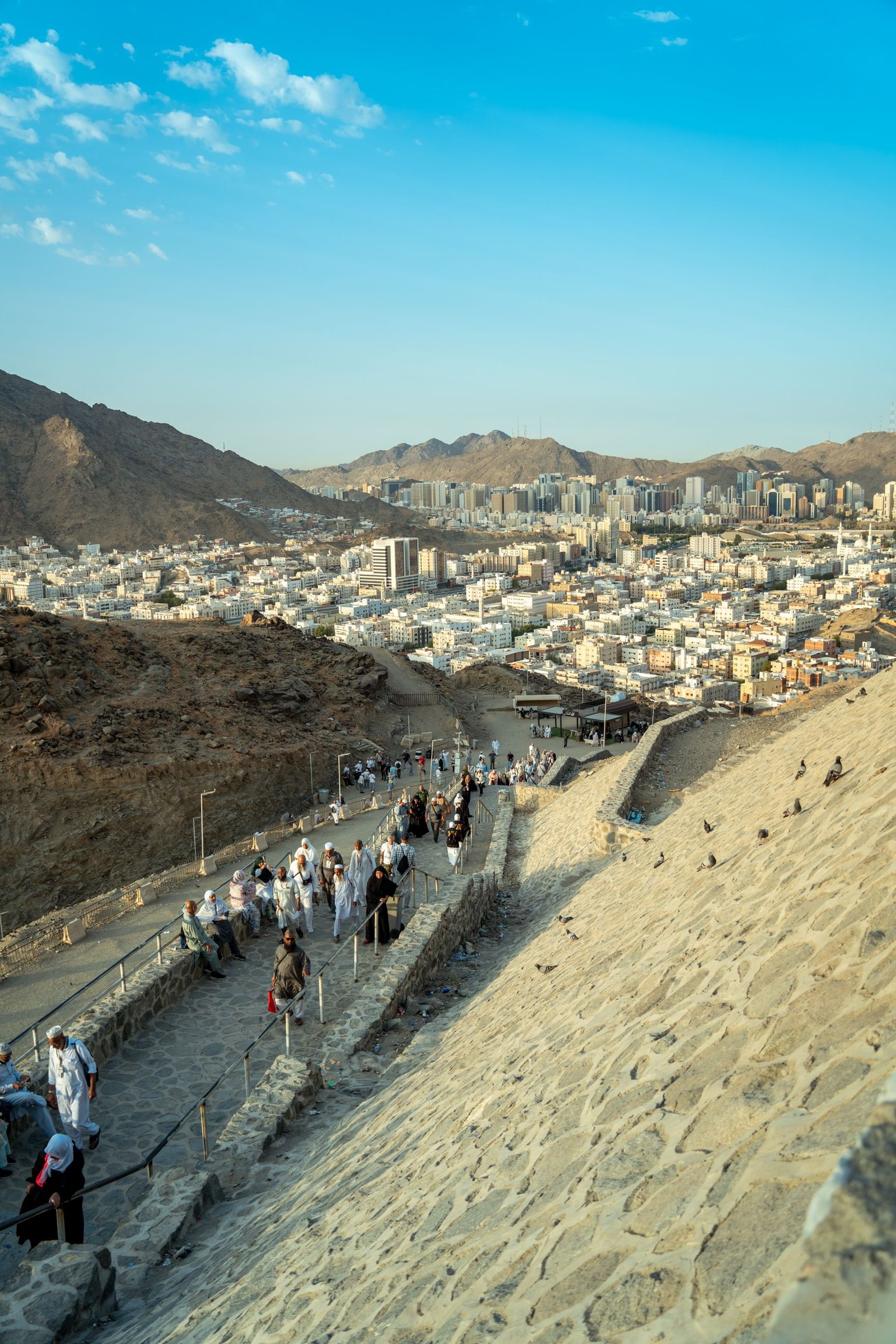
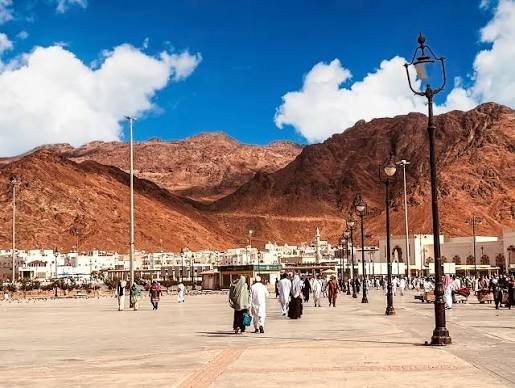
Mount Uhud is a historic and sacred mountain located about 4 to 5 kilometers north of Al-Masjid an-Nabawi in Madinah, Saudi Arabia.The Cave of Mount Uhud (Arabic: غار جبل احد) is a naturally formed cave on the side of Mount Uhud facing Masjid-e-Nabwi. It is where the Prophet (ﷺ) took refuge after being wounded during the Battle of Uhud. He was carried there on the back of Talha (رضي الله عنه).The mountain of Uhud is a significant Ziyarat place in Madinah near Masjid an-nabawi that every pilgrim should definitely visit. It's an historic site of the Battle of Uhud and the resting place of the beloved martyrs, including Hazrat Hamza (RA). Therefore, visiting the mount of Uhud powerfully teaches deep lessons of patience, obedience and reliance on Allah Almighty.
04
Sab'a Masajid (The Seven Mosques)
5 km from Masjid an-Nabawi
Sab'a Masajid (The Seven Mosques) is a historic group of small mosques located at the foot of Mount Sela' in Medina, Saudi Arabia, marking the positions of Muslim troops during the 627 CE Battle of the Trench.Sab'a Masajid is a complex of various small mosques including Masjid al-Khandaq. These historic mounts are located near the battlefield of Khandaq where Muslims defended themselves by digging Khandaq around the border of Madinah. So, visiting Sab'a Masajid revives the patience and bravery of Muslims that every Muslim should practice to protect the status of Islam and implement the message of Islam in daily life.
05
Bir Rumah (Well of Uthman)
5 km north of Madinah
The Well of Uthman ibn Affan (also known as Bir Rumah) holds a significant place in Islamic history due to its connection with Uthman ibn Affan (RA), the third Caliph of Islam and one of the Prophet (SAW)’s closest companions.
During the time of the Prophet Muhammad (SAW), there was a water shortage in Madinah, and the only well providing fresh water was owned by a Jewish man who sold it at high prices. Uthman ibn Affan, known for his generosity, purchased the well for the benefit of the Muslim community.
After acquiring the well, Uthman (RA) made its water free for everyone, turning it into a public resource. This act of charity earned him great respect among the Muslims, and it became one of his most well-known contributions to the early Islamic community.
06
Masjid-e-Nabwi (Al-Masjid an-Nabawi)
6 km — near Mount Sela'
Masjid-e-Nabawi (The Prophet’s Mosque) in Madinah was established by Prophet Muhammad (PBUH) in 1 AH (622 CE) immediately after his migration from Makkah.Masjid al-Nabawi (Arabic: المسجد النبوي; “The Prophet’s Mosque”) was built by the Prophet ﷺ shortly after his migration from Makkah to Madinah in 1 AH (622 CE). It was originally a small mosque built from mud bricks and palm fronds but has undergone several expansions throughout history making it one of the largest mosques in the world today. The grave of the Prophet ﷺ, as well as the graves of two of his most faithful companions, Abu Bakr al-Siddiq and Umar ibn al-Khattab I, are located within the mosque, making Masjid al-Nabawi one of the most visited sites of ziyarah.
Masjid Nabawi is the heart of Madinah. The building has been a focal point as the city has grown exponentially around it over hundreds of years. When the mosque was first established by the Prophet ﷺ it was much more than a place where congregational prayers were performed five times a day.After many years of persecution at the hands of the Meccans, in the year 1 AH (622 CE), the Muslim community began their migration to Madinah, which was previously known as Yathrib. The two most prominent Medinan tribes, the Banu Aws and Banu Khazraj united in their support of the Prophet ﷺ and welcomed the emigrant Muslims, known as the Muhajirun (Arabic: المهاجرون; “The Emigrants”), with open arms. The Muslim inhabitants of Madinah came to be known as the Ansar (Arabic: الأنصار; “The Helpers”). They were taught the tenants of Islam by Mus‘ab ibn Umair I, who was sent by the Prophet ﷺ to Madinah as an ambassador.
07
Jannat-ul-Baqi story
6 km from Masjid an-Nabawi
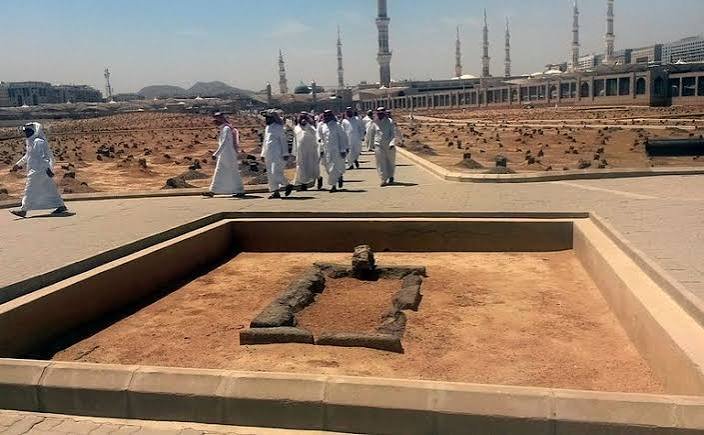
Jannat-ul-Baqi is the first and oldest Islamic cemetery in Madinah, Saudi Arabia, located directly to the southeast of the Prophet's Mosque (Al-Masjid an-Nabawi).Jannat-ul-Baqi is the oldest and most sacred Islamic cemetery in Medina, located right next to the Prophet's Mosque.When Muhammad arrived in Medina from Mecca in September 622 CE, al-Baqi' was a land covered with boxthorn. According to historical records, after Muhammad’s arrival, the houses of Medina developed near al-Baqi', which was therefore considered the public tomb. The bramble growth was cleared, and the place was consecrated to be the future cemetery of the Muslims who died in al-Madina.[4] Additionally, al-Baqi’ was introduced as a location with Nakhl on its east side and houses on its west side. In fact, before its demolition, al-Baqi’ was situated behind the houses in the city.[5] During the construction of the Prophet’s Mosque on the site he purchased from two orphan children after his migration from Mecca to Medina, As'ad ibn Zurarah, one of Muhammad's companions, died. Muhammad chose the spot to be a cemetery, and As'ad was the first individual to be buried in al-Baqi' among the Ansar.
While Muhammad was outside Medina for the Battle of Badr, his daughter Ruqayyah fell ill and died in 624. She was buried in al-Baqi'. Ruqayyah was the first person from the Ahl al-Bayt (Household of Muhammad) to be buried in this cemetery. Shortly after Muhammad arrived from Badr, Uthman bin Maz'oon died in 3 AH (624/625 CE) and was buried in al-Baqi'.[4] He was considered the first companion of Muhammad from the Muhajirun to be buried in the cemetery. Muhammad also referred to him as the first ‘among us to go to the hereafter,’ and he named the place where Uthman bin Maz’oon is buried as Rawhā. When his youngest son Ibrahim died, Muhammad commanded that he be buried there as well. He watered the grave and called this place Zawrā.[6] Following his instructions, two of his daughters Zainab and Umm Kulthum, were also buried near the grave of Uthman bin Maz'oon.[7]
Initially, the third caliph, Uthman,[8] was buried in the large neighbouring Jewish graveyard. The first expansion of al-Baqi' was carried out by Muawiyah I, the first Umayyad caliph. To honor Uthman, Muawiyah incorporated the extensive Jewish cemetery into al-Baqi’s burial grounds. The Umayyad Caliphate constructed the first dome over Uthman’s grave in al-Baqi’. Over time, numerous domes and structures were built or reconstructed over various graves in al-Baqi’.
08
Garden of Salman Farsi
5 km — near Masjid Quba
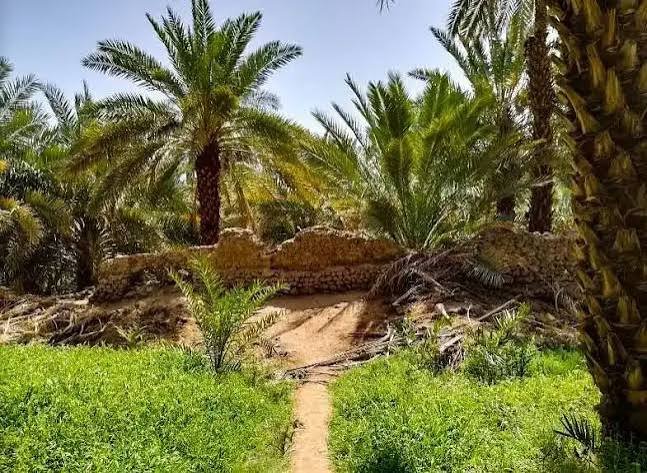
The orchard where Hazrat Salman al-Farsi (RA) planted date palms on the advice of the Prophet ﷺ in his journey to faith and freedom — today a green, peaceful farm beside Masjid Salman.The Garden of Salman Al-Farsi is a historic date farm in Madinah, Saudi Arabia, where the Prophet Muhammad and his companions personally planted 300 date palms to help secure the companion's freedom from slavery.The Prophet Muhammad (PBUH) instructed the other companions to help prepare the land, and the Prophet himself planted every single one of the 300 saplings with his own blessed hands.The site features the historic Al-Faqir Well (associated with Salman Al-Farsi), which has been recently restored by local authorities and is known for its sweet, fresh water.
09
Masjid al-Jumu'ah
Quba road, Madinah
Your Ziyarat ends among the date farms of Madinah — Ajwa, Anbara and Safawi — so you can carry the sweetness of Madinah home to your family.

.jpg)
.png)
.jpg)